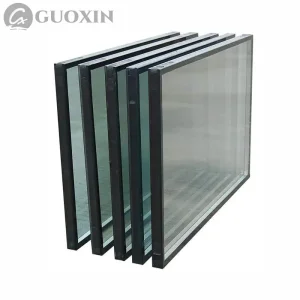
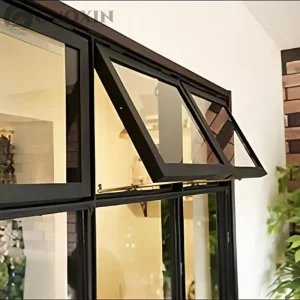
In modern architectural design, the performance of a building's envelope is defined by its glazing systems. As a leading manufacturer specializing in Custom Insulated Glass Thickness, we understand that thickness is not just a dimension—it is the primary variable controlling U-values (thermal conductivity), Sound Transmission Class (STC) ratings, and solar heat gain coefficients (SHGC). Achieving the optimal thickness involves a sophisticated balance of glass pane gauge, spacer width, and the inert gas fill medium.
Standardized glass often fails to meet regional energy codes. Our manufacturing approach focuses on custom-engineered thickness profiles. By adjusting the composition—such as pairing 6mm low-E tempered glass with a 12mm or 16mm argon-filled spacer—we drastically reduce thermal bridging. This level of customization allows our clients to achieve passive house standards and significant LEED certification points.
China’s glass manufacturing industry has evolved from mass production to high-precision engineering. Our facility utilizes advanced automated production lines for Insulated Glass Units (IGU). Key advantages include:
The industry is trending towards "Intelligent Glazing." We are seeing an surge in demand for IGU configurations that integrate dynamic shading or smart-film lamination.
We provide localized consultation for different climates:
The air gap (spacer width) is critical. Generally, 12mm to 16mm is optimal for argon-filled units. Beyond 20mm, convection currents inside the gap can actually reduce thermal insulation efficiency.
Yes. As a custom factory, we conduct load-bearing analysis to determine the required glass thickness (e.g., 8mm+12A+8mm) to withstand wind pressures and building height requirements.
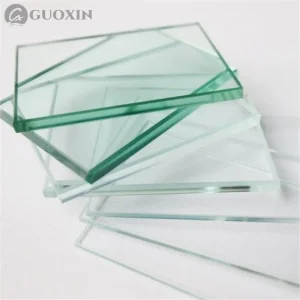
Tempered glass is heat-treated to be 4-5 times stronger and safer upon breakage. For architectural exterior applications, tempered insulated glass is mandatory to comply with international safety building codes.
 Guoxin