Engineered architectural glass systems designed to fulfill advanced technical configurations and high mechanical performance requirements.
Analyzing key structural, energy-efficiency, and localization demands from global architects and general contractors.
The global commercial real estate sector is undergoing a profound shift toward transparent, high-efficiency building envelopes. Custom double glass sliding doors are no longer simple architectural elements; they represent critical intersections of structural stability, thermal insulation, and aesthetic transparency. Enterprise-level buyers, ranging from commercial facade engineers in North America to residential estate developers in Northern Europe, must evaluate sliding door manufacturers through a rigorous multi-tier validation process.
Procurement mandates typically prioritize system-level performance indices. Under current energy conservation acts, such as the EU's Energy Performance of Buildings Directive (EPBD) and ASHRAE 90.1, the U-value of structural openings has become a highly scrutinized parameter. Custom double glass configurations utilizing low-emissivity (Low-E) coatings and argon gas fill chambers are standard requirements to mitigate thermal bridging. Furthermore, wind-load resistance—calculated under local building codes (e.g., ASCE 7 for the United States)—requires robust heavy-duty aluminum extrusions combined with structural silicon glazing and tempered security glass.
"True energy performance relies on the harmony between the glass assembly and frame profiles. A double glass sliding door is a dynamic thermophysical boundary that determines up to 35% of a building's cooling and heating loads."
To address these dynamic market needs, manufacturers must demonstrate supply chain resilience and verified manufacturing capacities. Buyers require comprehensive documentation, including certified acoustic performance data (STC and Rw ratings) for environments near high-noise corridors, and physical safety declarations that comply with local standards such as ANSI Z97.1 in North America or EN 12600 in Europe.
A leading enterprise in the glass industry with a stable and successful track record spanning two decades.
Jiangsu Guoxin Glass Co., Ltd. was established in 2006. Over a 20-year operational history, the corporation has evolved into a leading national enterprise in high-performance glass and aluminum fenestration systems. The company operates advanced production facilities featuring state-of-the-art automated cutting, grinding, and tempering lines, alongside dedicated cleanroom environments for insulated and laminated glass assembly.
Our continuous investment in research and development has allowed us to deliver integrated architectural solutions worldwide. We maintain total quality control across our core divisions: high-quality aluminum frames, fireproof barriers, laminated safety structures, and argon-filled thermal insulated glass units. This comprehensive structural capability ensures our custom double glass sliding doors perform reliably under challenging climate conditions.
Precision-engineered products leveraging advanced material science to meet structural requirements.

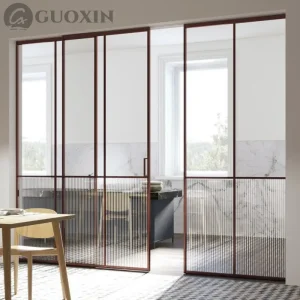
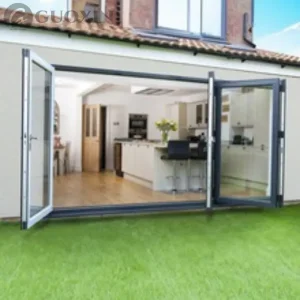
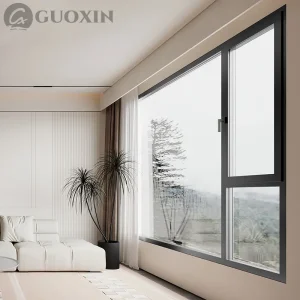
Heavy-duty structural framing utilizing thermal breaks and multi-point locking mechanisms.
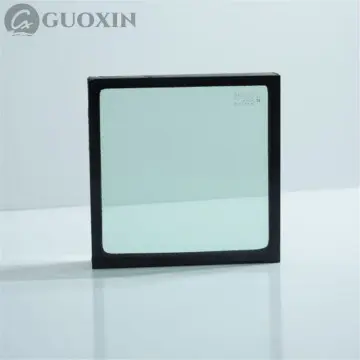
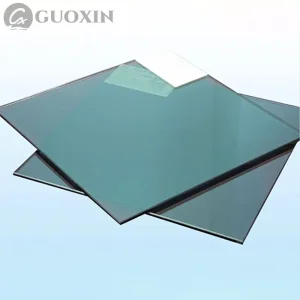
Intumescent interlayers offering EI-class fire resistance and radiant heat protection.
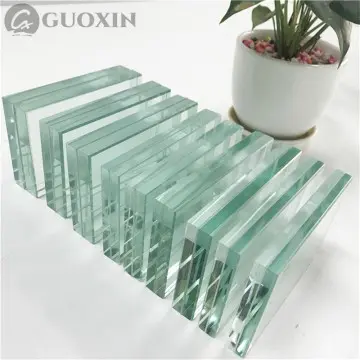
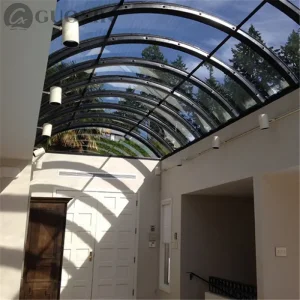
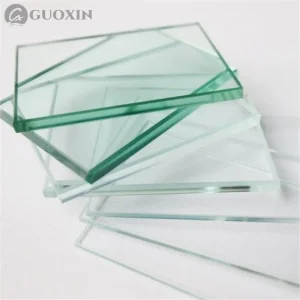
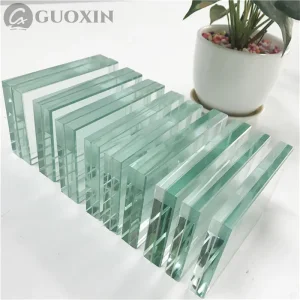
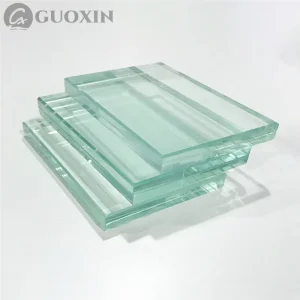
High-strength PVB/SGP interlayers for maximum safety, security, and acoustic performance.
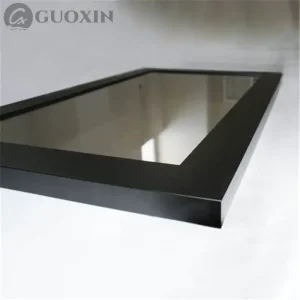
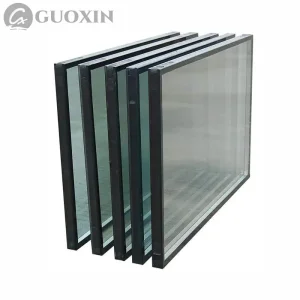
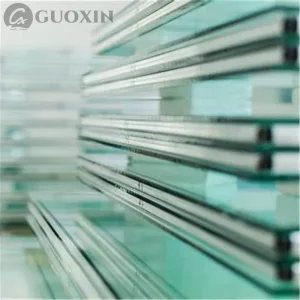
Argon-filled dual-seal units that minimize heat transfer coefficients (U-values).
An in-depth analysis of low-emissivity coatings, gas cavity optimization, and aluminum thermal breaks.
Engineering a custom double glass sliding door requires optimizing multiple physical variables. The thermal performance of the unit is governed by the center-of-glass U-value ($U_{cog}$) and the linear thermal transmittance of the edge spacer ($\Psi$). By integrating double-silver and triple-silver magnetron sputtered Low-E coatings onto surfaces #2 or #3 of the insulated glass unit (IGU), longwave infrared radiation is reflected back into the conditioned building interior.
The insulation performance is further enhanced by replacing dry air in the 12mm to 18mm cavity with 90%+ pure Argon or Krypton gas. This reduces the convective heat transfer coefficient inside the cavity. The edge of the glass unit is sealed using high-performance thermoplastic warm-edge spacers (TPS) that minimize thermal bridging. This structural setup helps prevent condensation along the window frame under cold exterior conditions.
Large-span sliding panels introduce significant mechanical loads onto the roller assemblies and track profiles. Guoxin's sliding system designs utilize structural grade 6063-T6 aluminum extrusions, which are optimized to withstand high deflection pressures ($L/175$ deflection limits). Multi-point locking hardware combined with stainless steel tandem wheels and precision-extruded guides ensures smooth, reliable operation of sliding sashes weighing over 400kg.
For high-security or coastal hurricane-prone areas, our technical roadmap features SentryGlas Plus (SGP) ionoplast interlayers. Compared to traditional PVB, SGP interlayers offer five times the tear strength and one hundred times the rigidity. This prevents glass collapse even under high-impact conditions.
Additionally, we use 3D laser engraving technology to etch custom patterns inside the glass without compromising its mechanical strength. This combination of structural durability and design flexibility supports specialized architectural requirements for landmark public buildings and high-end commercial spaces.
Showcasing structural performance and specialized glazing installations across notable commercial structures.
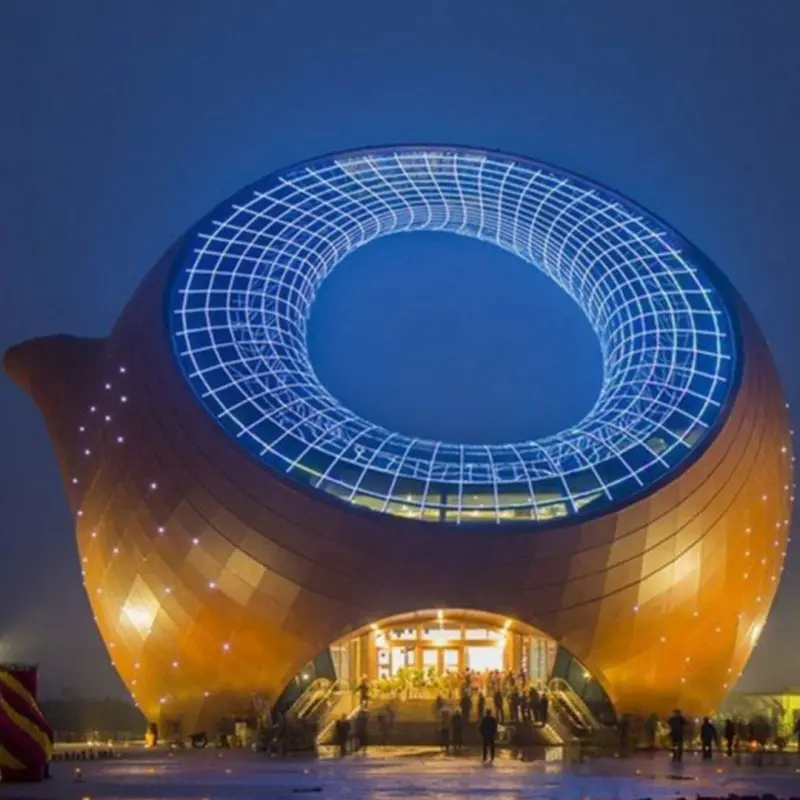
Certified as the "World's largest purple clay pot shaped building" (38.8 meters high). Built using customized aluminum framing and variable-dimension art stained glass panels engineered by Guoxin Glass.
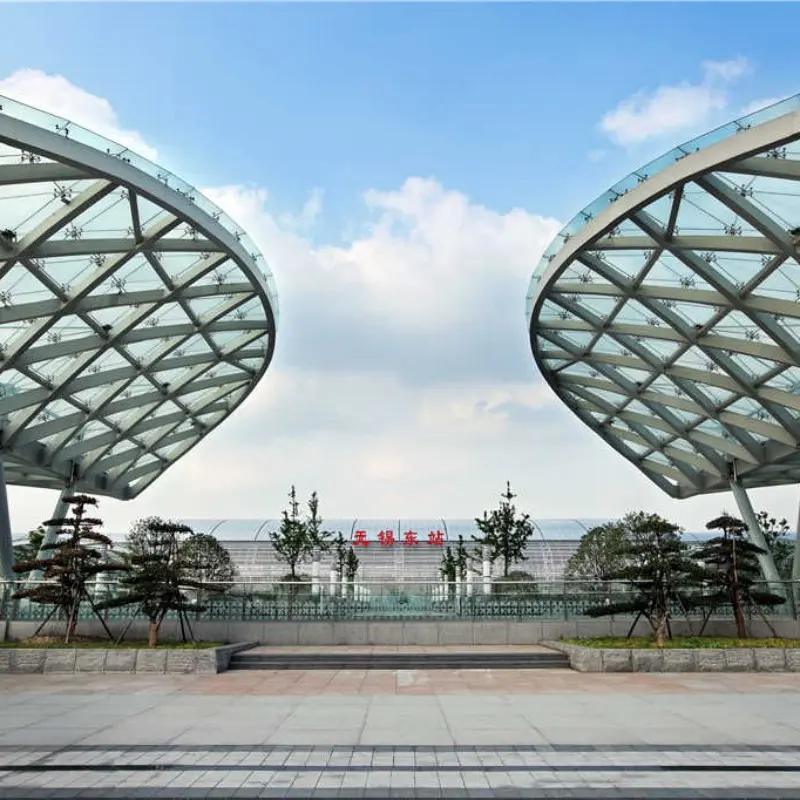
An extensive redevelopment project utilizing thousands of high-strength laminated safety glass panels. Engineered to withstand heavy traffic and structural vibration loads across a 18,000 sqm transit facility.

Standing at 450 meters (the 7th tallest skyscraper globally). The curtain wall system integrates Guoxin's premium double insulated glass to meet demanding solar control and thermal insulation performance standards.
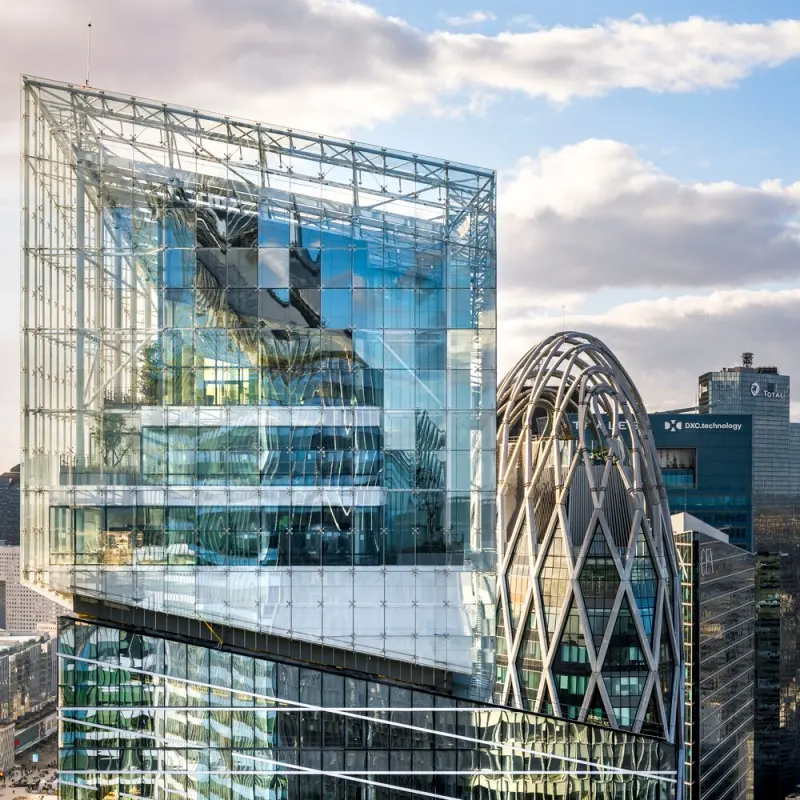
A high-performance double-glazed installation featuring integrated Daylight Algorithms. Custom panels dynamically control glare and solar gain, reducing building HVAC energy consumption.
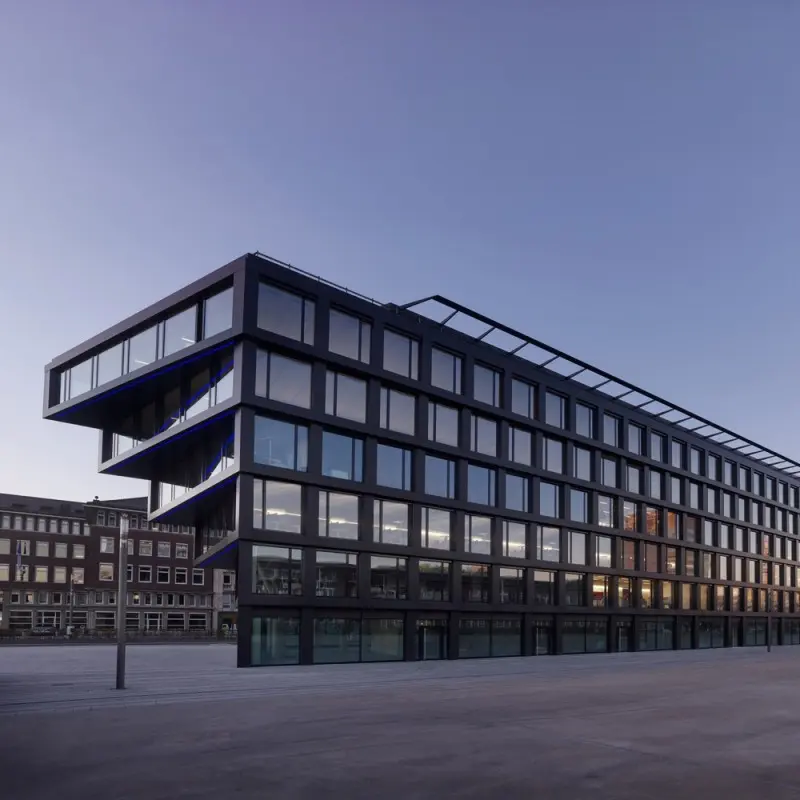
Designed for acoustic control and low thermal transmittance. Equipped with triple-insulated solar control glass panels, achieving a heat recovery rate of over 80% across the facade system.
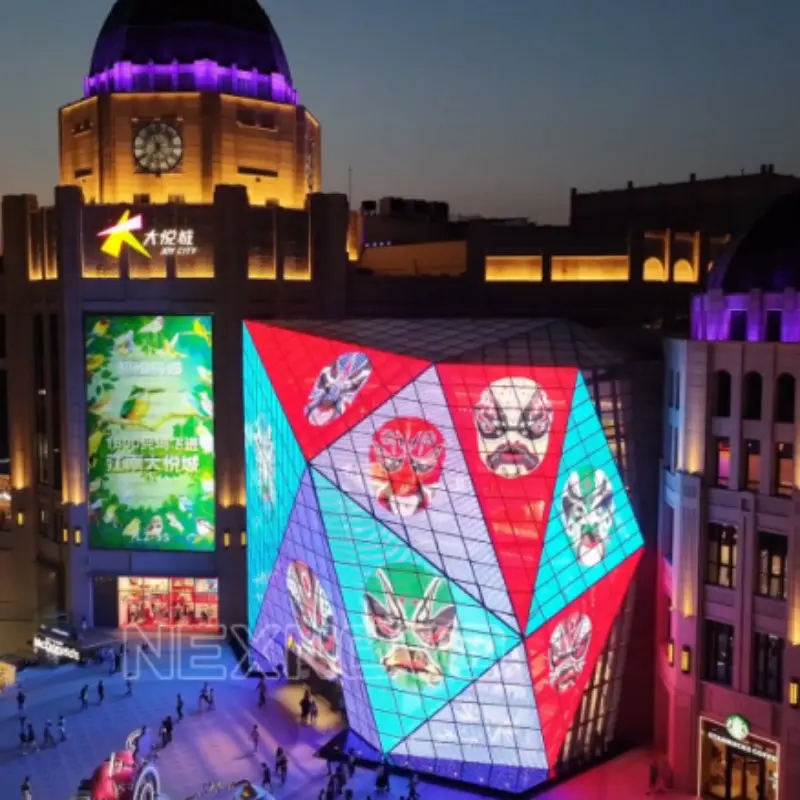
A commercial complex incorporating large-format smart glass panels. The installation delivers controllable transparency and dynamic facade lighting to create a distinctive aesthetic presence.
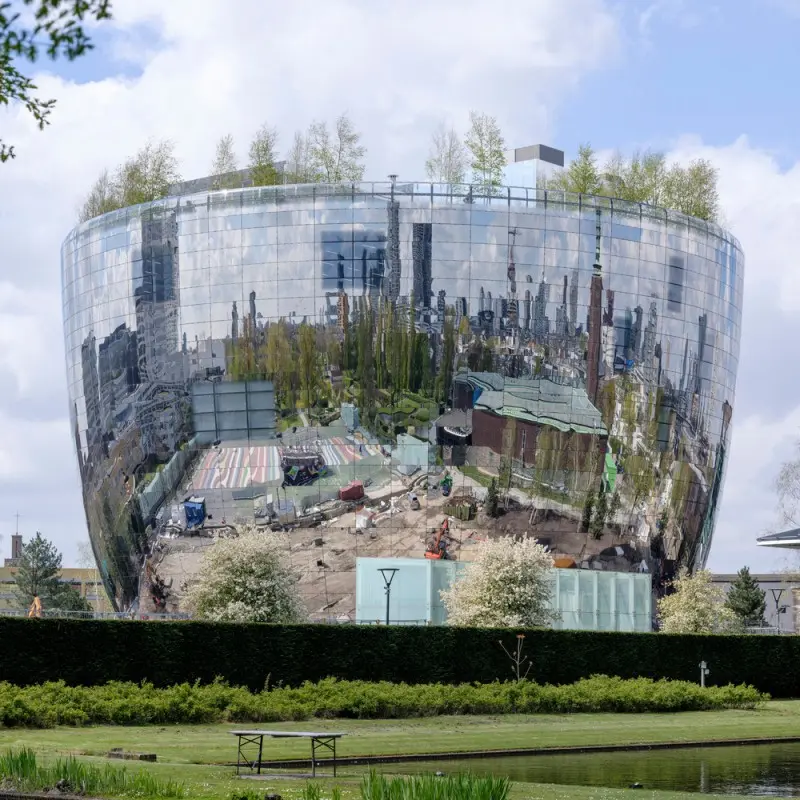
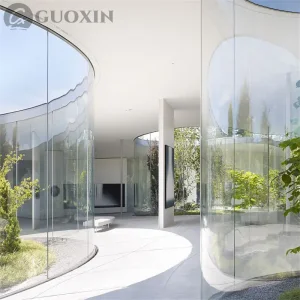
Featuring a 15,000 square meter highly reflective curved glass facade. The design integrates the building seamlessly with the surrounding park while maintaining structural stability and energy efficiency.
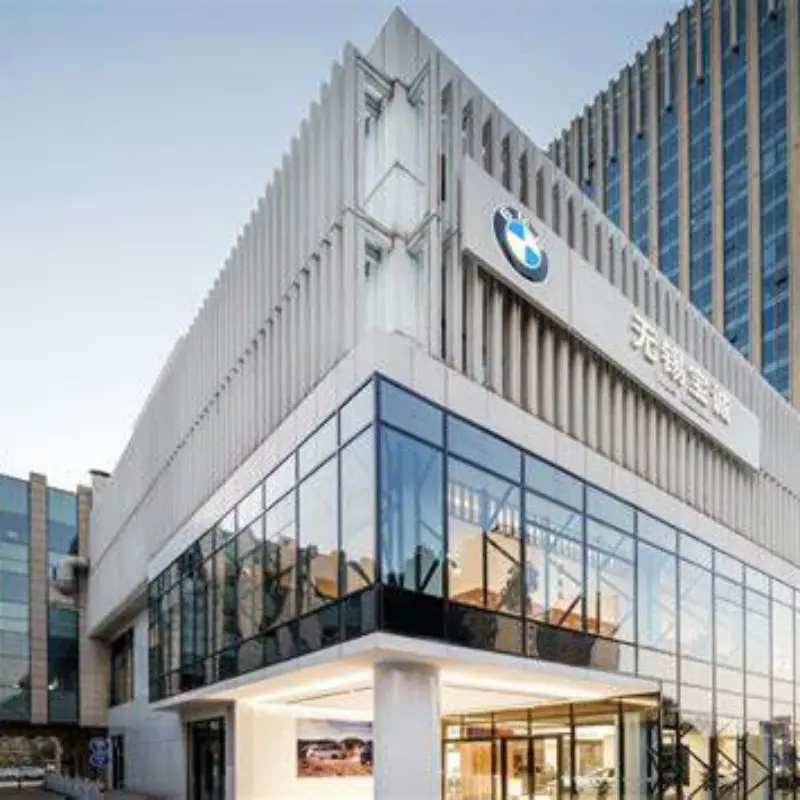
A structural glazing solution using large-format, high-transmittance reflective glass. Optimizes natural daylighting and solar control to display vehicles in premium, glare-free settings.
A look inside our automated production lines, testing laboratories, and global quality control frameworks.
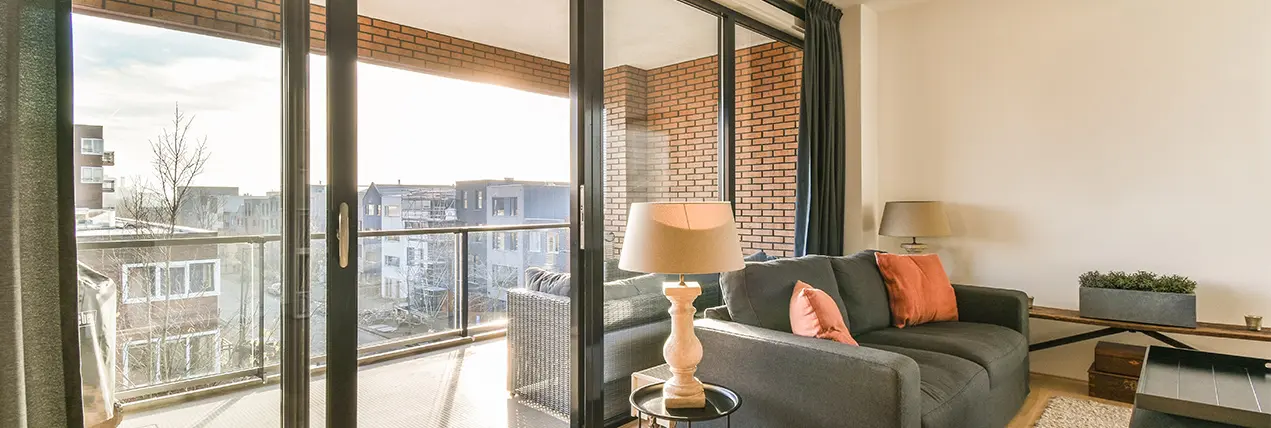


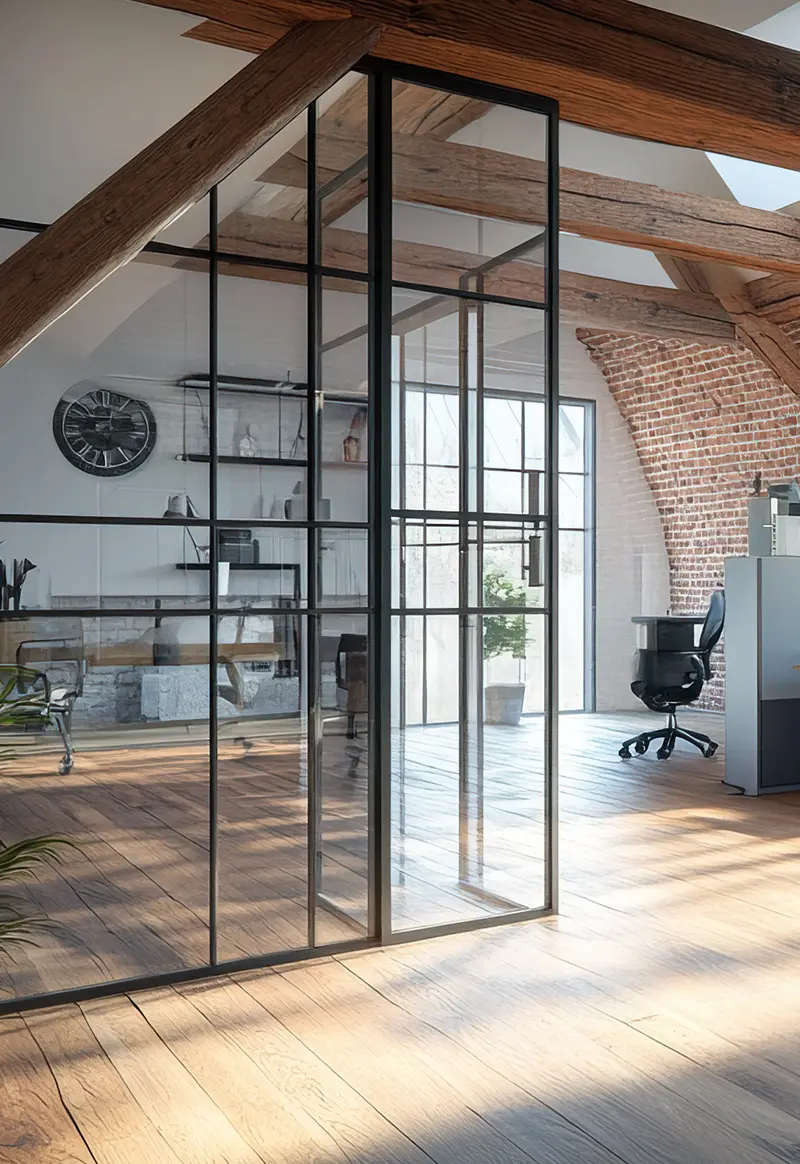
We work closely with global engineering firms and architectural practices to supply custom double glass sliding doors and high-performance facade panels worldwide.
Initiate Engineering ConsultingWe supply glass and frame systems to major structural projects across Europe, the Americas, and the Asia-Pacific region.

Detailed engineering and procurement answers regarding structural glass specifications.
Thermal efficiency is optimized by combining low-emissivity (Low-E) coatings with inert gas fills in the insulating glass unit (IGU). Low-E coatings reflect longwave infrared radiation back into the interior during winter and block solar heat during summer. Filling the cavity with 90%+ Argon gas reduces convection currents, lowering the center-of-glass U-value. Thermally broken aluminum frames isolate the inner and outer metal sections with a polyamide barrier to minimize thermal bridging.
SentryGlas Plus (SGP) is an ionoplast interlayer that offers five times the tear strength and up to one hundred times the rigidity of traditional Polyvinyl Butyral (PVB). SGP provides superior structural performance, impact resistance, and weatherability. It prevents the glass from collapsing even if fractured, making it suitable for hurricane-prone areas and high-load structural glazing. PVB remains a cost-effective choice for standard security and sound dampening.
Mechanical validation involves testing the deflection limits of the frame profiles under simulated wind loads ($L/175$ limit). The hardware and roller components undergo cycle testing (typically 100,000 to 200,000 cycles) to verify smooth operation with heavy glass panels (often over 300kg). Double weather-stripping and multi-point lock systems are also tested to ensure they meet standard air infiltration and water penetration ratings.
ISO 9001:2015 certification ensures a consistent level of quality control across all stages of production, from raw material procurement to final product delivery. For custom structural glazing, this framework ensures that processes like heat soaking, tempering, and laminating are performed under controlled conditions, reducing the risk of spontaneous glass breakage or premature seal failure.
Yes. Acoustic performance is improved by using asymmetrical glass thicknesses (e.g., 6mm outer pane + 8mm inner pane) to disrupt sound waves, and by integrating acoustic PVB interlayers into one or both of the glass components. This configuration dampens external noise transmission across a range of frequencies, achieving sound reduction ratings of Rw 40 dB or higher.
Detailed articles addressing material selection, comparative performance, and structural glass standards.

An engineering breakdown comparing the thermal resistance, integrity ratings (E/EI classes), and structural limits of specialized fireproof glass against standard architectural safety glass.
Read Article
Exploring the performance of laminated glass configurations, detailing impact testing, post-breakage behavior, and acoustic dampening across multi-family projects.
Read Article
A structural comparison analyzing load capacities, thermal contraction/expansion coefficients, and durability ratings of aluminum alloy profiles versus PVC frames.
Read ArticleExplore our complete range of specialized safety glass, insulated window frames, and custom glass configurations.
 Guoxin